
Chiropractor Email List: Building Campaigns for Independent Practices
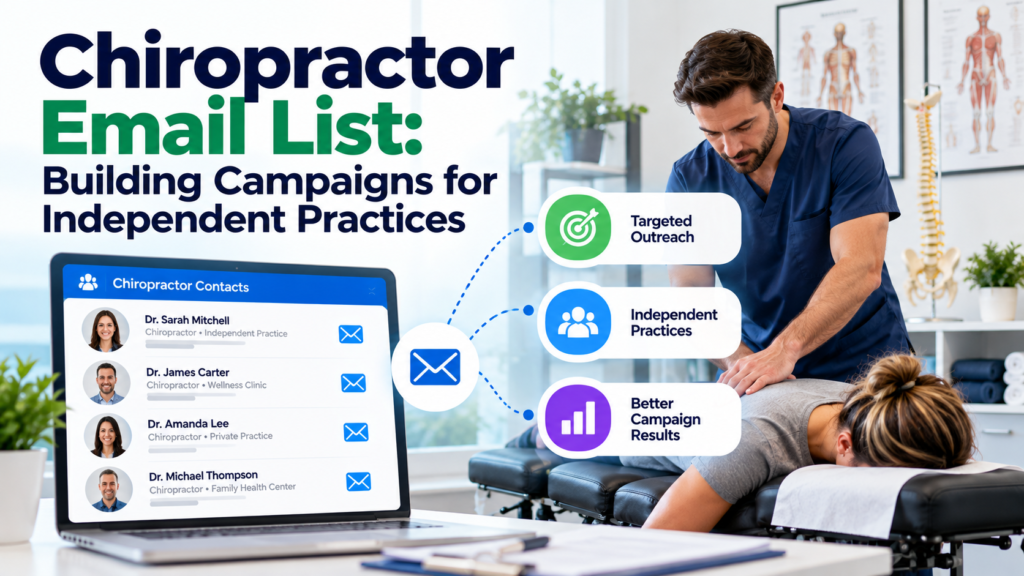
An independent chiropractic clinic rarely buys the way a hospital does. The person who treats patients may also approve software, compare equipment quotes, and handle staff issues after closing. A campaign built for large health systems will miss that reality. It may reach the right profession and still reach the wrong buyer with the wrong offer.
A Chiropractor Email List gives B2B sellers a starting point for finding practices. It does not prove that an inbox is active, that its owner can approve a purchase, or that a clinic needs the product. Those questions require research before a message goes out. The useful work lies in turning basic contact records into a small group of practices with a clear reason to hear from you.
TL;DR
Build an outreach campaign around the problems an independent clinic pays to solve. Start with the owner or office manager who handles that problem. Check that the practice is active and that its business contact details are current. Group similar practices, write one clear offer for each group, and send only where the law and mail provider rules allow. Track replies that show a real business need, then compare the cost of those conversations with the cost of research and sending. A smaller, well-checked list can be more useful than a large file full of unknown buyers.
Why Independent Chiropractic Practices Need a Different Approach
Independent practices combine clinical work with small-business decisions. A clinic may have several treatment rooms, yet its owner still signs the software agreement. A front-desk lead may screen every vendor call. The same practitioner can make a buying decision between patients, then put it off for a month when staffing gets tight. A good campaign accounts for those limits instead of treating every chiropractor as a free buyer. That is why a Chiropractor Email List needs buyer checks as well as specialty labels.
The market has a strong owner-operated element. The US Bureau of Labor Statistics reports that chiropractors held about 61,700 jobs in 2025, with 36% classified as self-employed. Its chiropractor employment outlook also projects job growth from 2025 to 2035, but those figures describe workers, not the number of independent clinics available to buy a product. One owner can operate several sites, and several practitioners may share one office. Counting professionals as separate sales accounts can distort the market.
Small clinics also weigh purchases against cash flow. A new scheduling tool may promise less desk work, but the owner has to consider the monthly fee and time spent changing staff routines. A treatment table might be valuable yet compete with rent, payroll, or repairs. Even a low-cost service can be postponed if the team is busy. Your message must state the specific trade-off it helps solve.
The US Census Bureau’s County Business Patterns offers establishment counts by industry and geography for businesses with paid employees. That can help a supplier compare territories, but it won’t count every self-employed office in the same way or identify who approves purchases. Treat industry statistics as planning context, then confirm each clinic as a real account.
Define the Practice Profile Before Choosing Contacts
Before using a Chiropractor Email List, start with a written account profile. In chiropractic email marketing, that profile comes before the export. State what the product does, which kind of clinic can use it, who approves payment, and what event makes the purchase timely. This takes less time than cleaning thousands of names that never should have entered the file. A Chiropractor Email List should reflect the offer’s fit rather than its total possible reach.
Separate the Economic Buyer From the Daily User
Chiropractic practice owners may approve spending on a billing platform while a billing lead judges whether it works. For treatment equipment, the clinician may lead the choice while a manager checks the quote. For appointment reminders, a front-desk employee may spot the problem first but lack purchasing authority. Write down the primary decision-maker and any person who can block adoption.
A chiropractor contact list should make these roles clear where the evidence supports them. Titles such as founder, doctor, and clinical director don’t always prove ownership. Search the practice website and public business details before applying an owner label. If authority is uncertain, use a neutral opening that asks who handles the relevant work.
Identify the Practice Conditions That Matter
A single-site clinic with no dedicated billing staff faces different limits from a 6-location group. Other useful factors include the number of practitioners, whether the clinic offers rehabilitation services, and the states where it operates. Use only fields that change the message or the buying case. Collecting details simply because a vendor sells them adds cost without helping the campaign.
A practical profile might read: independently owned practices with 1 to 3 locations, a visible office manager, and a public indication that they offer online booking. That is an example of a research filter, not a claim that these clinics are ready to buy. The next step is to connect the filter to a product problem, such as manual intake work or missed calls.
Where Chiropractor Contact Records Come From
Use Provider Records for Identity, Not Inbox Proof
The National Provider Identifier system is a useful place to check provider names and practice details. A Chiropractor Email List built from public records still needs contact and use checks. CMS makes NPPES data files available for public use, with monthly releases and weekly updates. CMS warns that receiving an NPI does not by itself prove licensure or credentials. These records also aren’t a ready-made, consent-based marketing file. A location in the data may be a mailing address rather than the place where a clinic currently sees patients.
You can also inspect individual records in the NPI Registry when matching a practitioner to a practice. Compare the name, taxonomy, organization, and location with other current sources. Check state licensing boards when a campaign depends on active license status. A match across sources increases confidence, but don’t assume that a registry supplies an accurate buying contact or verified email address.
Compare Buying a File With Building Your Own
A chiropractor contact list from a commercial supplier can save research time. Its usefulness depends on the supplier’s sourcing rights, refresh methods, and willingness to show sample records. An in-house build offers more control but consumes staff time and may still require permission checks. A chiropractor mailing list bought for direct mail also needs postal fields that an email-only file may omit.
| Source | Useful Evidence | Main Gap to Check |
| Public provider data | Practitioner identity and listed practice details | Licensure and buying role remain unproved |
| Clinic website | Services, location, and published business contact | Details may be old or routed to reception |
| Commercial supplier | Combined contact fields and segmentation | Source rights, age of records, and duplicates |
| First-party signups | Contact interest tied to a known interaction | Audience may be small or outside the target market |
Before buying, ask for a sample drawn from the exact requested segment. Check whether email addresses are work-related, when each was last checked, and what happens if records fail basic validation. Ask how the supplier handles opt-outs and removal requests. Avoid vendors that promise universal accuracy or cannot describe where their data came from.
Clean and Verify the Database Before Sending
Cleaning a Chiropractor Email List isn’t a cosmetic task. It determines whether you reach the right practice, protect your sender reputation, and avoid contacting a person who asked to be left alone. The first job is to choose an account key. Practice name alone isn’t enough because names change and branches share brands. Use a stable internal ID linked to a verified location and, where available, provider or organization identifiers.
Normalize business names and addresses in a chiropractor contact list, then look for multiple records tied to one office. Decide whether 2 chiropractors at the same location are separate buying contacts or duplicates for this campaign. If both are relevant, cap contact attempts at the account level. A clinic shouldn’t receive the same pitch through every employee in a single week.
Record Evidence and Contact Status
Store the source URL or vendor batch, research date, intended role, and validation result. Mark uncertain details as uncertain. A syntactically valid address is not the same as a delivered message, and a delivered message is not proof that a person read it. Catch-all mail domains make those distinctions harder, so treat a verifier’s output as a signal rather than a promise.
Security belongs in the same process. The FTC’s personal information guide urges businesses to know what they hold, keep what they need, and dispose of data that no longer serves a valid purpose. Limit access to contact exports and keep suppression records protected. A shared spreadsheet that anyone can copy makes data governance harder.
Use a written retention rule for untouched leads and inactive accounts. The NIST Privacy Framework offers a way to assess privacy risk across business processes, though it doesn’t grant permission to use any particular contact list. Keep the data fields your team can explain and defend. Remove records when the allowed purpose has ended, subject to legal retention needs.
Segment the Audience Around Reasons to Buy
When working from a Chiropractor Email List, segment by the business task first, then apply geography or size only when it affects that task. A vendor offering claims support may need clinics that bill insurers. A company selling equipment maintenance may need offices with the type of equipment it services. A webinar provider may segment by licensed state because continuing education rules differ. All of these cases produce different messages from the same broad profession file.
Build Segments You Can Explain in One Sentence
For a first test with chiropractic practice owners, make 2 or 3 groups with distinct problems. For example, one group may contain single-location offices using online scheduling; another may contain multi-provider clinics with visible billing roles. These are hypothetical segments, not findings about specific practices. Write a sentence explaining why each group might benefit. If that sentence could describe any business, the filter is too broad.
Chiropractic practice owners are easier to engage when the message reflects a constraint they can recognize. Mention the cost of staff time for a software workflow, or equipment downtime for a repair service. Avoid guesses about patient volume, revenue, insurance denials, or treatment outcomes. Those claims require evidence you probably don’t have from the list.
A chiropractor mailing list may support geographic testing when the product needs onsite delivery. Group by a service radius rather than arbitrary state lines. If an offer can be delivered remotely, location might matter less than practice software or staff size. Don’t use every field as a filter at once. You may create groups too small to learn from.
Match the Offer to the Work Inside a Clinic
A Chiropractor Email List works as a sales tool when the offer solves a problem the clinic recognizes and can assess. In a small practice, staff changes have an immediate cost. An owner may need to train reception staff after switching a scheduling platform. A billing service could lower internal admin work but introduce a new monthly fee and handoff process. State those trade-offs clearly instead of claiming a product will save time for every buyer.
Translate Features Into a Verifiable Business Case
Choose one work problem for each email. If the product helps staff handle intake forms, explain the current step it replaces and the setup the clinic must complete. If it tracks equipment service, name the records it keeps and the kind of failure it may help flag. Avoid a general list of features with no connection to the reader’s workload.
Health-related claims need extra care. The FTC’s health product guidance explains that advertising claims about benefits and safety must be truthful and supported by suitable evidence. This matters to suppliers selling devices, wellness products, or patient-facing services through chiropractic practices. A B2B recipient is still entitled to accurate product information. Don’t imply clinical results that a product hasn’t proved.
Testimonials pose a related risk. The FTC’s endorsement guidance explains why endorsements must not mislead and why material ties can require disclosure. If you quote a clinic owner’s experience, obtain permission and describe what the result measures. Don’t turn one customer’s experience into a typical outcome without evidence.
Choose an Offer That Fits a First Conversation
A first email can offer a relevant sample report, a pricing explanation, a product specification, or a short review of a known workflow. Pick something the buyer can judge without giving you access to patient records. A broad request for a demonstration may feel like too much work when the message arrives without a prior relationship.
Related reading: How to lower cost per click on Google Ads for B2B campaigns
Write Email That a Busy Practice Owner Can Assess
Independent clinics have limited attention. In chiropractic email marketing, the opening lines should name the reason for contact and give the reader an easy way to decide whether it fits. An inbox doesn’t need another long introduction about a vendor’s history. It needs to know why this product belongs in the clinic’s workday.
Start With a Checkable Observation
You might write that you saw the practice uses an online booking page, then ask whether its staff still re-enters intake details. That question is useful only if the observation is accurate and the product actually addresses the task. Don’t pretend you’ve audited the clinic. Avoid lines that praise its growth when you have no evidence about revenue or demand.
The subject line should also be plain. “Question about intake forms” tells the reader what follows. “Important partnership opportunity” says very little. Use the practice’s name only when the right organization is confirmed. A wrong name or location can signal that the whole message came from a careless bulk file.
Give the Buyer a Clear Reply Choice
For a chiropractor contact list, a practical message can follow this order: relevant observation, possible cost or delay, what the product changes, and one direct question. Explain any claim you can measure. If setup takes staff time, acknowledge it. If a service is limited to certain states or systems, say so. A refusal is more useful than a misleading yes.
For chiropractic practice owners, email should respect clinical time. A concise message can be read between appointments without asking the owner to decode industry language. Don’t attach a large brochure to the first note unless the person requested it. Offer a specific detail and let the buyer ask for more.
Plan a Campaign Sequence That Respects Clinic Schedules
A sequence built from a Chiropractor Email List should help a recipient understand an offer over time, not repeat the first pitch with louder language. Plan it before sending, including when contact ends. An unanswered email is not proof of interest. Silence may mean the offer doesn’t fit, the recipient is busy, or the message never reached the inbox.
One workable test might use an initial note, a single follow-up that adds a relevant detail, and a final short check. The spacing should reflect the value of the offer and the recipient’s likely workload. There is no universal number of days that makes a purchased list effective. Choose a modest schedule and stop on a negative reply or an opt-out immediately.
Coordinate Follow-Up at the Practice Level
If the doctor forwards your note to the office manager, record the handoff before another team member writes to the doctor. If an account has several locations, determine whether purchasing is local or shared. The same clinic shouldn’t receive overlapping sequences from sales and marketing because 2 exports used different names.
For a chiropractor mailing list with postal addresses, a catalog or invitation may make sense for a physical product, but direct mail needs its own cost case and postal review. Don’t assume that permission or suitability for email automatically covers texts or phone calls. Those channels have separate legal requirements, and automated calling or texting can trigger strict rules.
Chiropractic email marketing works best when each step answers a different buyer question. The first message explains fit. The next can cover the likely setup effort. A later note might answer a common procurement concern. Avoid false urgency, invented scarcity, or messages that imply a previous conversation never happened.
Apply Email and Privacy Rules to Every Send
B2B email still has legal duties. This applies to chiropractic email marketing even when the recipient owns a business. In the United States, the CAN-SPAM Act covers commercial email, including business-to-business messages. The FTC’s CAN-SPAM compliance guide requires truthful sender information, honest subject lines, clear identification of advertising, a valid postal address, and a clear way to stop future marketing. Opt-out requests must be honored within 10 business days. Hiring a vendor to send mail doesn’t remove the advertiser’s duties.
US federal CAN-SPAM rules generally don’t require advance opt-in consent for every commercial email. That does not mean a purchased address is safe to use anywhere. State privacy rules, platform terms, contract limits, and the way data was collected may impose other limits. Some email services ban or tightly restrict purchased lists even when a proposed send could meet federal law. Check the rules before importing records.
Consider State Rights and Data Purpose
California deserves special attention because the old exemption for many B2B contact records expired at the end of 2022. The California Privacy Protection Agency’s business privacy FAQ confirms that change. Whether a particular company is covered depends on the law’s scope and thresholds. Covered businesses must assess notice duties and individual rights instead of assuming that work emails have no privacy protection.
Keep Patient Information Out of Prospecting Data
A Chiropractor Email List is a business-contact resource; it should not contain patient lists, diagnosis details, or treatment histories. HHS HIPAA marketing guidance explains limits on using protected health information for marketing by covered entities. A supplier emailing a chiropractor at a publicly listed work address does not, by that act alone, handle patient PHI. But the duties change if a clinic shares patient information or hires a service to process PHI.
Set Up Email Authentication and Delivery Controls
Good contact records cannot fix poor sender setup. Mail providers use identity checks and recipient behavior to decide what reaches an inbox. Google requires basic authentication for senders to Gmail, with further rules for senders above its daily bulk threshold. Its email sender guidelines describe SPF or DKIM for all senders, and stronger requirements involving SPF, DKIM, and DMARC for larger senders. Marketing messages from bulk senders must also support easy unsubscription.
Authentication does different jobs. SPF lists authorized sending systems. DKIM signs messages. DMARC helps a domain owner express how receiving services should handle mail that fails aligned authentication checks. CISA’s DMARC guidance recommends staged setup and review because an aggressive rule can block valid mail when the sending systems haven’t been mapped. Make sure the email platform, CRM, and any other approved sender are covered.
Watch Reputation Rather Than Hiding Volume
Google’s Postmaster Tools dashboards can show spam reports, authentication, and delivery problems for mail sent to personal Gmail accounts when enough data is available. Those reports aren’t real-time, and very low-volume senders may see limited figures. Read them with your platform’s bounce data and direct replies. A strong delivery score does not mean the message reached the right decision-maker.
Chiropractic practice owners may use shared office inboxes. A receptionist could read an email without forwarding it. Some security filters may also open links automatically. These facts make open and click counts weak proof of buying interest. A short, credible message with a clear reply path is usually easier to interpret than a campaign built around elaborate tracking.
Measure Campaign Results Beyond Open Rates
The useful measure is the number of qualified business conversations, not the size of the file. A 5,000-record export has little value if half the records point to the same clinics or the offered product doesn’t fit. Start reporting from distinct target practices, then follow the path from attempted delivery to accepted sales opportunity.
Use an Account-Based Measurement Chain
Track eligible practices, contacted practices, delivered messages, replies from the intended role, qualified conversations, meetings held, and opportunities created. Mark negative replies and unsubscribes separately. A “thanks” response is not a sales opportunity. A booked call that the recipient never attends shouldn’t count as a completed meeting.
For chiropractic email marketing, compare results by segment and offer. If owner-operated clinics respond while larger groups do not, check whether your first message speaks to the wrong buyer in those groups. If replies are positive but few deals progress, the problem may be pricing or product fit rather than data quality. Each stage answers a different question.
Calculate the Cost of a Qualified Conversation
Use the full program cost: purchased records, research time, verification tools, writing work, mail infrastructure, and sales follow-up. Divide that figure by the number of conversations that meet a written qualification rule. Then compare the result with expected gross profit from a customer, allowing for the time to close a sale. This method avoids assuming that every reply has equal value.
A hypothetical example shows the math. If a campaign costs $2,400 and produces 12 qualified conversations, the cost per qualified conversation is $200. That isn’t a market benchmark or proof of profit. A seller with a small annual contract may struggle to recover that cost; a supplier with a larger purchase and healthy margins may have room to continue. The answer depends on actual conversion and retention.
Control Costs and Test Before Expanding the List
For chiropractic email marketing, the most common budget error is buying too much data before proving that the offer works. A broad chiropractor mailing list may appear cheap per record, yet verification and staff time can erase that saving. Start with one territory or practice type, then test an offer that matches its needs. Research quality takes precedence over volume.
A chiropractor mailing list sold by geography should be evaluated on usable practices and delivery fields. List prices vary by provider, geography, fields, and usage rights. There is no reliable universal price per chiropractor contact. Ask for the number of unique practices after deduplication, the share with an appropriate business address, the date of validation, replacement terms, and limits on reuse. Compare suppliers on usable accounts rather than a headline record count.
Set a Budget for the Whole Campaign
Plan costs before launch. Separate data acquisition from verification, sending tools, content work, and follow-up time. Also allow for bounced records that have to be removed. If a vendor offers a credit for invalid data, check the definition of invalid and how quickly a claim must be made. A guarantee with narrow terms might not cover the problem that matters to you.
For a chiropractor contact list, a small hand-checked sample can reveal common errors. Look for closed clinics, old addresses, practice names that don’t match the doctor, and unrelated specialties. If those errors occur often, resolve the source issue before buying another batch. Running a larger campaign against weak data only increases the cost of the mistake.
Treat the First Campaign as a Decision Test
Write the success rule before anyone sends. It might require a minimum number of qualified conversations, an acceptable cost per meeting, or evidence that owners understand the offer. Don’t change the rule after seeing the results. If the test fails, review the data, offer, and copy in that order, using the campaign record to locate the weak stage.
What a Sustainable Independent-Practice Campaign Looks Like
A durable campaign starts with accurate account research and ends with a clear decision about whether the offer belongs in the market. It does not depend on emailing every licensed chiropractor in a state. The goal is to reach clinics that can use a product, identify who handles the purchase, and make contact in a way that respects the practice’s time.
A Chiropractor Email List remains valuable when its records stay current and its source can be explained. But list size is a poor substitute for proof of business fit. The strongest process treats a clinic as an account with its own staff roles and buying limits. It records what has been checked and stops sending when a contact declines.
The next decision should follow a small set of facts: how many eligible practices were reached, how many qualified conversations followed, what those conversations cost, and whether the resulting opportunities can repay the spend. Those figures tell a team when to keep the campaign, change its focus, or stop.
Frequently Asked Questions
What Is a Chiropractor Email List?
A Chiropractor Email List is a set of professional contact records for chiropractors and related practice decision-makers. It may include work emails, practice names, business addresses, roles, and location details. It should not be treated as proof that each person has agreed to receive marketing. Buyers still need to check record quality and applicable outreach rules.
How Do I Find Independent Chiropractic Practices Rather Than Large Groups?
Start with practice websites and public business details. Check the number of locations, ownership statements, and listed clinicians. Use commercial firmographic fields as clues, then verify unclear records. A clinic with several chiropractors can still be independently owned, while a familiar local name may belong to a larger group.
What Details Should a Chiropractor Contact List Include?
A chiropractor contact list should contain the practice name, verified business location, relevant contact role, professional email where lawfully available, and the source or last-check date. An internal account ID helps prevent duplicate outreach. Only collect extra fields when they change targeting, the message, or follow-up work.
Is an NPI Record Proof That a Chiropractor Is Licensed?
No. CMS states that an NPI doesn’t establish or validate licensure or credentials. Use a current state licensing source when license status matters. Provider records can help match names and practices, but they don’t prove that an email address is active or belongs to the person who approves purchases.
Can I Buy a Chiropractor Mailing List for Email Campaigns?
A chiropractor mailing list may contain postal addresses without usable email fields. Confirm exactly what the file includes and whether the proposed use is permitted. Ask for sample records, sourcing methods, update dates, and replacement terms. Review your email platform’s policies before importing any purchased contacts.
Does CAN-SPAM Apply to Emails Sent to Chiropractors?
Yes. US CAN-SPAM requirements apply to commercial B2B email. The sender must use accurate headers and subjects, give a valid postal address, provide a clear opt-out method, and honor opt-outs within the required period. Other privacy laws and email-platform rules can add obligations.
Do I Need Consent Before Sending a B2B Email in the United States?
Federal CAN-SPAM law generally doesn’t require prior opt-in for every commercial email. That doesn’t make all contact lists acceptable. A state law, data agreement, or mail provider may require more. Review how the address was collected and which rules apply to the recipient and your business.
Does HIPAA Apply to a Business Email List of Chiropractors?
A list limited to professional business details does not automatically contain protected health information. HIPAA concerns arise when covered entities or their business associates use or disclose PHI in regulated activities. Keep patient data out of prospecting files and get appropriate legal and privacy guidance before handling patient information.
Which Businesses Can Use a Chiropractor Email List?
Companies that sell relevant B2B products or services to clinics may find it useful. Examples include practice software, billing support, equipment maintenance, and professional education. Fit matters more than the industry label. A supplier should be able to explain the actual work its offer changes for the clinic.
How Should I Segment Chiropractic Practice Owners?
Group chiropractic practice owners by factors tied to buying needs, such as location count, likely buying role, service mix, or the presence of a known workflow. Avoid guessing revenue or patient volume from a directory entry. Make each segment narrow enough for one clear message but large enough to test fairly.
How Many Follow-Up Emails Should I Send?
There is no fixed number that works for all clinics. Use a restrained sequence where each follow-up adds useful information. Stop promptly after an opt-out or clear refusal. Judge the schedule by recipient feedback and the value of the offer, rather than by a target number of touches.
Why Are My Chiropractor Emails Bouncing?
Common causes include old addresses, typing errors, closed accounts, and domains that no longer accept mail. Some servers reject messages because of authentication or sender reputation. Review delivery logs and verification results. Remove hard bounces instead of retrying them through other tools.
What Is the Best Way to Measure Chiropractic Email Marketing?
Measure unique eligible practices, delivered messages, qualified replies, completed meetings, and opportunities. Track unsubscribes and complaints as well. Compare the cost of the full campaign with qualified conversations, not with total opens. A reply from the wrong role should not count as a sales-qualified result.
How Often Should Contact Records Be Updated?
Update a record when there is a meaningful change or before using it in a new campaign. Fast-moving details, such as job title and mailbox status, may need more frequent checks than location data. Preserve the check date and source. Suppression requests should take effect promptly and persist across future imports.
Can a Small List Perform Better Than a Large Database?
Yes, when its accounts match the offer and the contacts are accurate. A small list can reduce wasted research and make follow-up easier to manage. Size alone can’t predict results. Compare the cost per qualified conversation and the share of eligible practices reached before choosing whether to expand.



1 thought on “Chiropractor Email List: Building Campaigns for Independent Practices”