How AI Marketing Misconceptions Can Cost You Google Rankings Copy
iinfotanks September 1, 2026 0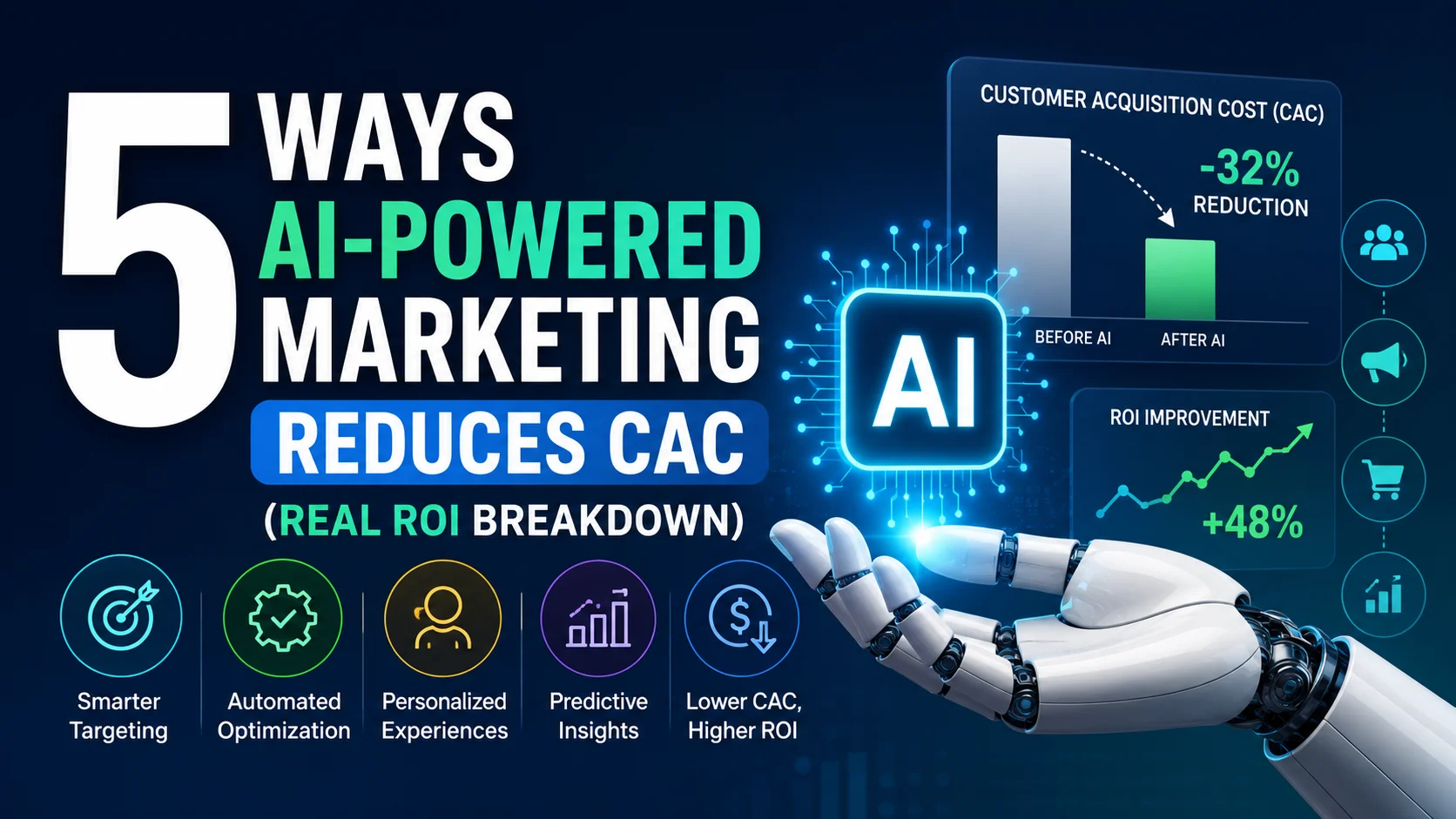
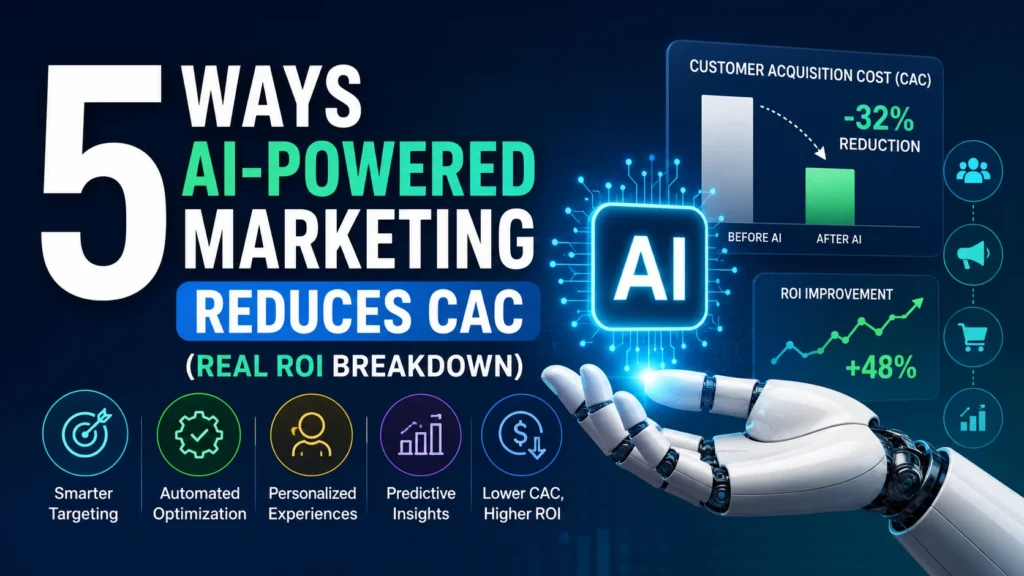
An AI marketing tool can arrive as a dashboard, plug into your ad accounts, start adjusting bids overnight, and produce a report that says spend went down while conversions went up. Those numbers create the appearance of a clean win because the total looks better than last month. The operational picture is more specific. The tool itself, the campaign it touches, the customers it influences, and the cost you’re comparing against can all move independently. A drop in blended CAC can come from a better model, a seasonal dip in competition, a pricing change, or a channel shift unrelated to AI. Customer acquisition cost is a ratio, and a ratio can improve because the top number fell or because the bottom number grew for reasons that have nothing to do with the tool you just paid for.
That distinction matters because AI marketing tools change what they influence over time. A bidding model that cuts cost per click this month can bid up the same audience once every competitor adopts the same tool. A lead-scoring model trained on 6 months of data can drift as your product, price, or ideal customer shifts. A personalization engine can lift conversion rate on paid traffic while leaving organic, direct, and referral traffic in the same CAC calculation untouched. Each layer raises a separate question: which part of the CAC change came from the AI system, which part came from the market, and which part would have happened anyway.
The practical answer to “does AI reduce CAC” is mechanism-specific and channel-specific. Some AI tools cut waste in targeting. Some cut the cost of producing and testing creative. Some cut the labor cost baked into manual bid management. Some leave acquisition spend alone and instead reduce how many new customers you need by keeping existing ones. A single label like “AI-powered marketing” leaves open which of those is happening in your account. The useful way to evaluate the claim is to separate the mechanism from the metric: what specifically changed, and does that change explain the CAC movement you’re seeing.
TL;DR
Concern: A marketing team adopts an AI tool, CAC falls the following quarter, and the tool gets full credit. The fall may come from the tool, from the market, or from a mix the team never separated. Verifying “AI reduced CAC” requires knowing which mechanism did the work.
Overview: Five mechanisms account for most of the real change attributed to AI marketing: targeting precision, creative testing speed, bid and budget automation, retention that lowers total acquisition spend, and personalization at scale. Each one moves a different part of the CAC formula, and each one has a different failure mode.
Approach: Treat every AI-driven CAC claim as a formula with named inputs. Before crediting a tool, confirm which mechanism it uses, which channel it touches, and what the baseline looked like before the tool was live. Then track a per-mechanism efficiency number next to blended CAC so the team can see which lever is pulling weight.
The ad spend and the efficiency behind it are separate things
A finance team can look at total marketing spend and total new customers and get one number: CAC. That number hides the mechanism. Two companies can report the same CAC drop while one earned it through better targeting and the other earned it through a market downturn that made ad inventory cheaper for everyone. Blended CAC gives you the outcome and stays silent on the cause.
That’s why an AI marketing claim needs a mechanism record next to the result. A vendor’s dashboard might report a 15% drop in cost per acquisition. That figure describes what happened inside the tool’s own reporting window. On its own it leaves open whether the drop came from the AI system, from a concurrent price change, from a new landing page, or from a competitor pulling back spend. A useful internal record keeps the mechanism, the channel, the date range, and the comparison baseline next to every CAC figure a tool takes credit for.
The 5 mechanisms that move CAC
Every AI marketing claim reduces to one or more of these 5 mechanisms. Naming the mechanism is what turns “AI reduced our CAC” from a marketing headline into something a finance team can check.
1. Targeting precision
Predictive models can score leads or audience segments on likelihood to convert, using signals like browsing behavior, firmographic data, or past purchase patterns. Spend shifts away from low-intent segments and toward high-intent ones. The CAC effect arrives as fewer wasted impressions and clicks. If your CAC drop came from this mechanism, conversion rate will move before cost per click does.
2. Creative testing speed
AI-generated ad variations let a team run more creative tests in the same budget window than a human design team could produce manually. More tests found faster means the best-performing ad gets more of the budget sooner, and the worst-performing ads burn less spend before getting cut. What changes is the time it takes to find a winning ad. The winning ad itself looks much the same.
3. Bid and budget automation
Automated bidding models adjust spend across campaigns and channels faster than a person checking a dashboard once a day. Budget moves toward the channel and audience combination performing best right now, and away from ones underperforming right now. The CAC effect arrives as fewer wasted dollars sitting in an underperforming campaign between manual reviews. This mechanism gets overstated more than the others, since much of the gain comes from checking more often rather than deciding better.
4. Retention that lowers total acquisition spend
Churn-prediction models flag at-risk customers early enough for a retention offer or outreach to work. Keeping an existing customer leaves cost per acquisition roughly where it was, and it lowers how many new customers you need to hit the same net growth number, which shrinks the total acquisition budget required. This shows up clearly in retention-adjusted CAC and stays invisible in blended CAC, so companies crediting AI with a large blended-CAC improvement should check whether this mechanism is doing work the number never captures.
5. Personalization at scale
Dynamic content, tailored email sequences, and adaptive on-site experiences can lift conversion rate on traffic you were already paying for. Spend stays flat while the number of customers it produces goes up, which lowers CAC through the denominator.
Correlation and attribution answer different questions
A CAC number falling after an AI tool goes live looks like proof, and on its own it proves nothing. Marketing attribution models can show which channel a conversion is credited to, and crediting a channel is a different exercise from crediting a mechanism inside that channel. A bidding model can take credit for a conversion that would have happened at the same cost without it, simply because it was live during the campaign.
The honest test is a holdout. Run the AI-driven approach on part of your audience or budget and a manual or prior-method approach on a comparable slice, then compare CAC across the two groups over the same window. Skip the holdout and you’re comparing this quarter’s number to last quarter’s while several other variables also moved. A vendor’s own reporting rarely includes this comparison, since showing a smaller effect than the total change works against the vendor.
AI tools do work. The size of the effect needs its own evidence, separate from the total CAC trend line, before a team scales spend on the strength of it.
One AI marketing budget can produce 4 very different outcomes
Consider 4 companies that each spend $50,000 a month on an AI marketing stack. The line item on the invoice is identical. The result depends entirely on the model underneath.
Implementation model | What it changes | Typical result | Main question before scaling |
|---|---|---|---|
Automated bidding only | Spend allocation across existing campaigns | Modest CAC improvement, fast to see | Would a daily manual review have caught most of it? |
AI creative generation + human targeting | Speed of finding a winning ad | CAC improvement concentrated in new campaigns | Does creative volume outpace your ability to check quality? |
Full-funnel AI stack (targeting, creative, bidding, retention) | Multiple mechanisms at once | Larger CAC improvement, harder to attribute to one cause | Which mechanism would you lose first if the budget got cut in half? |
AI overlay on an otherwise unchanged manual process | Reporting and forecasting | Little to no CAC change, better visibility | Is the team paying for a decision tool or a dashboard? |
A vendor’s price tag means little without knowing the model. A cheaper tool doing real targeting work can beat an expensive full-funnel stack that mostly reports. The practical task is identifying which row describes what you bought.
Different channels get a different AI layer
Paid search, paid social, and lifecycle email respond to AI differently, and treating them as one CAC number hides that. Paid search bidding is a mature, well-understood automation problem, so an AI layer there competes against platform-native automation that’s already fairly good. Paid social targeting benefits more, because audience discovery is harder to do manually at scale. Lifecycle email and on-site personalization benefit through a different route entirely: conversion lift on traffic you already paid for.
This matters for scaling decisions. A team that sees a strong CAC result from an AI layer on paid social should test before assuming the same tool will repeat it on paid search, where the ad platform’s own automation may already be doing most of that work. Tag the channel next to every CAC claim the same way you’d tag the mechanism. “AI reduced CAC by 20%” means something different on a channel where you’re competing against a platform’s built-in algorithm than on a channel where you’re the first team to apply real targeting logic.
Organic and owned channels sit outside this comparison. An AI content or SEO tool can lower the labor cost of producing pages, which shows up in CAC only if that labor cost was part of your acquisition budget to begin with. Many teams track paid CAC and total CAC as separate numbers for exactly this reason: a tool that cuts content production time can look inert if the labor savings never got counted as acquisition spend.
Run a measurement drill before you scale the budget
A useful test before committing more budget to an AI marketing tool: what happens if you turn it off for one channel next month? The answer exposes how much of the CAC improvement is real and how much is assumed.
Keep: Identify the campaigns, audiences, and creative assets that would keep performing without the tool. Write down why, so the reasoning survives a lapsed subscription.
Stop: Identify what depends on the tool being live: real-time bid adjustments, dynamic creative swaps, live lead scoring. Confirm what happens to spend efficiency the moment those stop.
Prove: Keep the holdout data, the before-and-after comparison, and the mechanism-level breakdown. This evidence matters when a budget review asks why the marketing line item grew and whether the CAC improvement will hold if it’s cut.
New AI tools need a measurement file
A signed contract and proof that the tool does what it claims are separate checks. A vendor demo showing a CAC drop in someone else’s account establishes little about what the tool will do in yours. Before rolling a tool out past a pilot, build an evidence packet: which mechanism the tool uses, what data it trains on, how long the model needs to reach a stable baseline, what the holdout comparison showed, and what CAC looked like for the 3 months before the tool went live.
This matters more for tools that touch pricing, retention offers, or anything customer-facing, where a faulty model output carries a cost beyond wasted ad spend. Someone on the team should be able to explain, in plain terms, why the CAC number moved, without pointing at a vendor’s dashboard as the only evidence.
Data lineage gets tangled the moment a tool touches your CRM
Once an AI tool connects to your CRM and ad accounts, its outputs start mixing with your own historical data. A lead score gets written back to a contact record. A predicted lifetime value gets used to set bid caps. An attribution model reassigns credit for conversions that happened months before the tool went live. The tool’s influence becomes one input inside a much larger set of records, and untangling what it caused gets harder every month it runs.
That creates a real reporting problem. If a lead score influences which contacts get called by sales, and sales performance then gets used to validate the lead score, the model is partly grading its own homework. Store the source of every field the AI tool writes, separate from fields your team enters manually, so a later review can tell which numbers came from the model and which came from a human judgment call.
Market conditions keep moving the CAC benchmark
A team that gets a strong CAC result from an AI tool in one quarter can treat that result as the new baseline. Ad platform algorithms change, competitor bidding behavior shifts, seasonal demand moves, and a targeting model trained on last quarter’s audience can start underperforming as that audience’s behavior changes. The tool is performing as before. The market around it has moved.
This is why a CAC number needs a “last validated” date next to it, the same way a dataset needs a refresh date. If a targeting model hasn’t been retrained in 6 months, a stable CAC number might reflect stale targeting logic quietly getting less efficient.
A useful habit is logging the competitive and platform context alongside every CAC report. A quarter where 2 major competitors cut spend compares poorly to a quarter where they doubled down. Without that context, a team reviewing CAC trends 12 months later has no way to tell whether a dip means the AI model needs retraining or the market simply got more expensive.
Personalization changes conversion faster than it changes cost
A personalization engine can lift conversion rate on a landing page, say from 2% to 3%, without touching how much you spend to get someone to that page. That’s a real CAC improvement of a different kind than a bidding tool cutting cost per click. Confusing the two leads teams to expect a personalization tool to lower media spend, which it rarely does, or to expect a bidding tool to deliver most of its gain through conversion rate, when its main lever is cost.
Before crediting a CAC drop to “AI-powered marketing” as a whole, separate whether the improvement came from paying less to reach people or from converting more of the people you were already reaching. The two point to different budget decisions: one argues for maintaining spend and improving the page, the other argues for testing whether spend can be cut without losing conversions.
Paid platforms add their own layer on top of the AI tool
Privacy changes, shifting rules around third-party cookies, and walled-garden data restrictions affect how much signal an AI targeting model has to work with, independent of how good the model itself is. A targeting model that performed well 2 years ago on rich third-party data may be working with a fraction of that signal today. When a CAC result underperforms expectations, the platform’s data environment is often the cause, and the AI system is often working fine.
Track platform-level data access as its own variable next to your CAC reporting. A model can be well-built and still produce worse results because the inputs it depends on have shrunk.
The retention value of a good customer can outlive the campaign that acquired them
An AI-driven acquisition campaign might hit an excellent CAC number by pulling in customers who churn within 3 months. If the CAC calculation stops at acquisition and never connects to retention, that campaign looks like a win right up until the churn shows up in a later quarter. A cheap customer who leaves quickly can be worth far less over a year than an expensive customer who stays.
Connect CAC reporting to a retention window before crediting an AI acquisition tool with a strong result. A campaign that produces customers with below-average retention needs that shortfall factored back in before anyone scales the budget behind it.
Use an ROI matrix before scaling any AI marketing spend
The most useful pre-scaling document is a one-page matrix that separates the claim from the evidence.
Action | Question to answer | Evidence to retain | Control to put in place |
|---|---|---|---|
Scale budget on a channel | Did a holdout confirm the mechanism as well as the trend? | Before/after comparison and holdout data | Mechanism tag on every CAC report |
Credit a tool with a CAC drop | Would this have happened without the tool? | Baseline CAC for the 3 months prior | Comparison window logged with each claim |
Trust a model’s targeting output | When was it last retrained? | Retrain date and performance since | Model refresh schedule |
Cut manual review in favor of automation | What decisions is automation making? | List of automated actions vs manual ones | Periodic manual audit of automated decisions |
Report CAC to finance | Is retention factored into the number? | Cohort retention data by acquisition channel | Blended CAC plus retention-adjusted CAC |
Where a row can’t be answered, treat the claim as unproven. That approach holds up better under a budget review than a single quarter’s CAC total.
Put a CAC checksum beside every campaign
A simple internal formula keeps the claim honest:
Verified net savings = (baseline CAC − current CAC) × new customers acquired
Count tool and platform fees once. If those fees already sit inside your marketing spend, current CAC has absorbed them and the formula stands as written. If you track them outside marketing spend, subtract them at the end and say so in the report.
This works as a control rather than a headline number. A missing holdout comparison makes the formula untrustworthy even when the top-line CAC looks better. A new competitor entering the market changes the baseline. A retrained model changes current CAC. A platform data change lowers confidence in either number. Both the CAC figure and the confidence behind it belong in the same report.
Before renewing, compare efficiency gained with confidence gained
A renewal decision often focuses on the CAC number alone. A better review asks what the next contract term buys beyond that number: a retrained model, a new mechanism, better platform data access, or continued access to the same tool at the same performance level. If the current tool has plateaued, renewal is mostly about avoiding disruption.
Separate those benefits in a renewal note: mechanism improvement, data access improvement, model retraining, new channel coverage, and support. That keeps a team from paying for “the same result again” while believing it bought an improvement.
What to ask before you invest in AI-powered marketing
- Which of the 5 mechanisms does this tool use: targeting, creative speed, bidding, retention, or personalization?
- What was CAC for the 3 months before this tool went live, on a comparable channel and budget?
- Has a holdout comparison confirmed the mechanism, or is the evidence a single before-and-after total?
- How often does the underlying model retrain, and when was it last retrained?
- Does the reported CAC improvement account for retention, or does it stop at acquisition?
- What happens to performance if a major ad platform changes its data-sharing rules?
- Which decisions does the tool make automatically, and which still need a person to check?
- What would happen to CAC if the tool were turned off for one channel next month?
- Is the vendor’s reported result from your account, or from an aggregate across other customers?
- Who on the team can explain, without the vendor’s dashboard, why the number moved?
Final thoughts: separate the mechanism from the metric
AI marketing tools can reduce CAC, and the 5 mechanisms above account for most of the real gains teams see: sharper targeting, faster creative testing, tighter bid automation, retention that lowers how many new customers you need, and personalization that gets more out of the traffic you already pay for. Each CAC drop reported after an AI tool goes live still needs its own evidence before the tool gets the credit.
The durable habit is naming the mechanism, comparing against a real baseline, and checking the result with a holdout before scaling the budget behind it. A team that does this can tell finance which lever is working and by how much. A team that skips it is reporting a total and hoping the story behind it holds up.
For AI-powered marketing, the practical question at review time is specific: which mechanism moved this number, compared against what baseline, confirmed by what evidence, and does it still hold now that the market has moved past the quarter it was measured in?
Frequently asked questions
- Does AI-powered marketing reduce CAC, or is it mostly a claim?
It can, through 5 specific mechanisms: targeting precision, creative testing speed, bid automation, retention that lowers total acquisition spend, and personalization. The size of the effect depends on which mechanism is doing the work and whether it’s been confirmed against a holdout comparison.
- Which AI marketing mechanism produces the biggest CAC improvement?
It varies by channel and starting point. Targeting precision tends to help most on channels with weak existing targeting, like paid social. Bid automation tends to help least on channels where the platform already automates bidding well, like mature paid search accounts.
- How do I know if a CAC drop came from AI or from the market?
Run a holdout: apply the AI-driven approach to part of your budget or audience and compare it against a manual or unchanged approach on a comparable slice, over the same time window. Without that comparison, a market-wide shift looks identical to a tool’s effect.
- Can an AI targeting model get worse over time even without a bug?
Yes. Audience behavior, platform data access, and competitor bidding all shift. A model trained on older data can drift out of alignment with current conditions. Track a retrain date next to your CAC reporting the same way you’d track a data refresh date.
- Does personalization lower CAC the same way bid automation does?
No. Bid automation lowers the cost side of the CAC ratio. Personalization raises the conversion side. Both lower CAC, through different mechanisms, and they call for different scaling decisions.
- Should retention be included in a CAC number?
Blended CAC alone can hide a campaign that acquires cheap customers who churn quickly. A retention-adjusted CAC, factoring in how long acquired customers stay, gives a more complete picture before scaling any acquisition channel.
- What’s the biggest mistake teams make when evaluating AI marketing ROI?
Crediting the whole CAC change to the tool without separating out concurrent factors like seasonality, pricing changes, or competitor spend shifts. A vendor’s own dashboard rarely isolates these variables.
- How often should an AI marketing model be retrained?
It depends on the channel and how fast the underlying audience or platform changes. There’s no fixed answer, though a model that hasn’t been retrained in 6 months or more deserves a performance check before you keep scaling budget on its output.
- Can AI tools work well and still show a disappointing CAC number?
Yes. A platform data restriction, a shrinking addressable audience, or a market-wide cost increase can offset real gains from the tool. Separate the tool’s mechanism-level performance from the blended CAC total before judging either one.
- Is a full-funnel AI stack better than a single-mechanism tool?
Not automatically. A full-funnel stack can produce a larger CAC improvement, and it’s harder to attribute to one cause, which makes it harder to know which part to keep if the budget gets cut. A single-mechanism tool is easier to evaluate on its own.
- What should I ask a vendor before buying an AI marketing tool?
Ask which mechanism the tool uses, what a holdout comparison showed in accounts similar to yours, how often the model retrains, and whether the reported CAC improvement includes retention or stops at acquisition.
- Does AI marketing automation replace the need for manual review?
Not entirely. Automated bidding and targeting still benefit from periodic manual audits, especially after a platform data change or a major shift in the competitive field. Full automation without review can drift for months before CAC moves enough to notice.
- Why did our CAC improve right after adopting an AI tool, then flatten out?
An early CAC improvement can come from low-hanging inefficiency the tool caught quickly. Once that’s captured, further gains depend on the model retraining against new data or on market conditions shifting in your favor.
- Can two companies use the same AI marketing platform and get different CAC results?
Yes. The mechanism, the channel it’s applied to, the quality of the starting data, and how well the team validates results against a holdout all affect the outcome. The platform is one input among several.
- What’s the single best way to verify an AI marketing ROI claim?
Compare a holdout group against the AI-driven group over the same window, on the same channel, with the same starting budget. That comparison isolates the tool’s effect from everything else that could explain a CAC change.